Workflow inefficiencies compounded across the full user journeys
Small usability issues at individual steps accumulated across multi-step workflows, resulting in significant friction over time and reducing overall system efficiency.
Information hierarchy did not consistently support task prioritization
Critical actions were not always surfaced clearly, requiring users to navigate across screens to complete key tasks. This disrupted workflow continuity and reduced efficiency.
Inconsistent interaction patterns reduced usability across features
Variations in navigation, labeling, and interaction design across products built by different teams made it difficult for users to develop reliable mental models.
Multi-step workflows created cognitive overload in time-sensitive environments
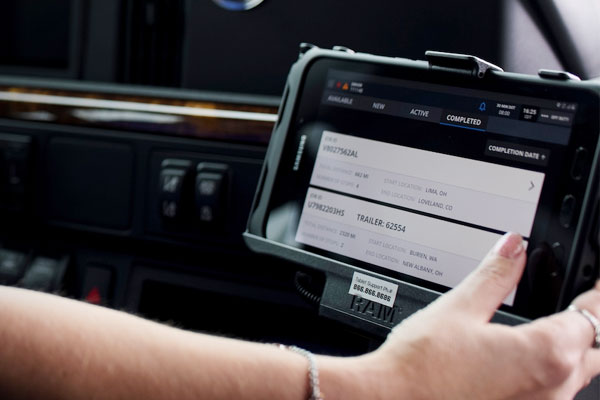
Complex workflows related to route logistics introduced unnecessary cognitive load in high-risk, time-sensitive contexts for end users (commercial drivers).
Accessibility inconsistencies impacted usability across the interfaces
Inconsistent iconography, sizing, and color usage across touchscreen interfaces created potential navigation challenges and reduced clarity for users.
Implications
Streamline multi-step workflows to reduce cognitive load
Simplify task flows, especially for route-related actions, to minimize unnecessary steps in time-sensitive environments.
Align system design with existing user mental models during transition
Incorporate familiar interaction patterns and terminology to support users adapting from legacy systems.
Improve information hierarchy to prioritize critical actions
Surface high-frequency and time-sensitive actions at the primary interaction level to reduce navigation friction.
Standardize interaction patterns across products and teams
Establish consistent navigation, labeling, and interaction conventions to improve usability and reduce learning curve.
Enhance accessibility and visual clarity across interfaces
Standardize iconography, sizing, and color usage to improve recognition and reduce ambiguity in touchscreen environments.